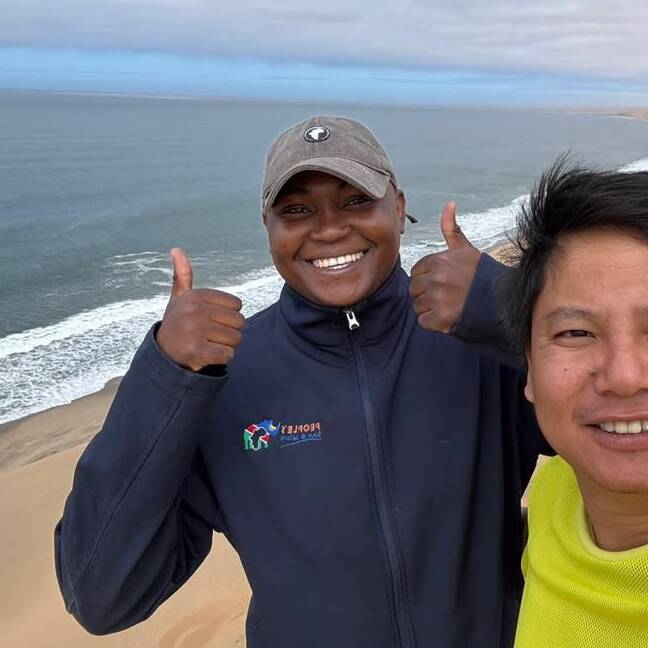
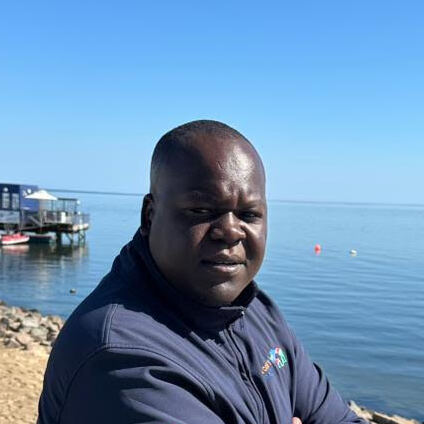
Planning for a Sandwich Harbour Fat Bike and 4x4 Tour? What if you could ride a bike on soft sand? Not a normal bike. A fat bike. Fat bikes have very wide tyres, about four times wider than a normal bicycle tyre. Those big tyres do not sink into loose sand. They spread your weight out and float on top. This means you can ride along beaches, tidal flats, and lagoon edges that would stop any other bike in seconds. That is exactly where this tour takes you.
The Fat Biking Part of the Tour
You start from Walvis Bay in the morning. Your guide hands you a fat bike and a helmet. Then you ride south along the edge of the lagoon. The ground here is flat and firm in most places. The tyres roll smoothly. Most people feel comfortable after just a few minutes.
The lagoon is on one side of you. The Atlantic Ocean is on the other. Flamingos stand in the shallow water to your left. There can be hundreds of them in one spot. Because fat bikes are quiet, you ride past without scaring them. You get much closer to the birds than you would from inside a car.
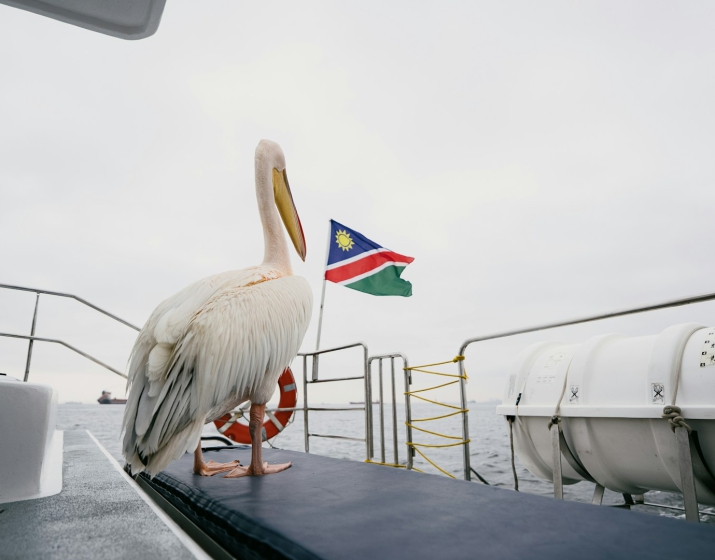
Pelicans fly low overhead. Cormorants dry their wings on rocks at the water’s edge. The whole lagoon is alive with birds, and you move through it all slowly and quietly.
The Walvis Bay lagoon is one of the most important wetlands in Africa. Riding through it quietly on a fat bike is a rare and peaceful experience.
Then On to Sandwich Harbour
After the bike ride, you transfer by 4×4 to Sandwich Harbour. The drive south takes about 45 minutes. Your guide crosses the tidal flats into the Namib-Naukluft National Park.
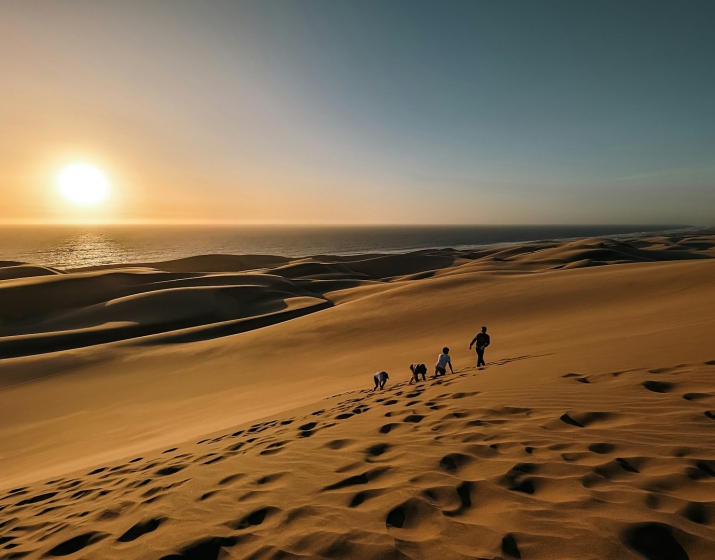
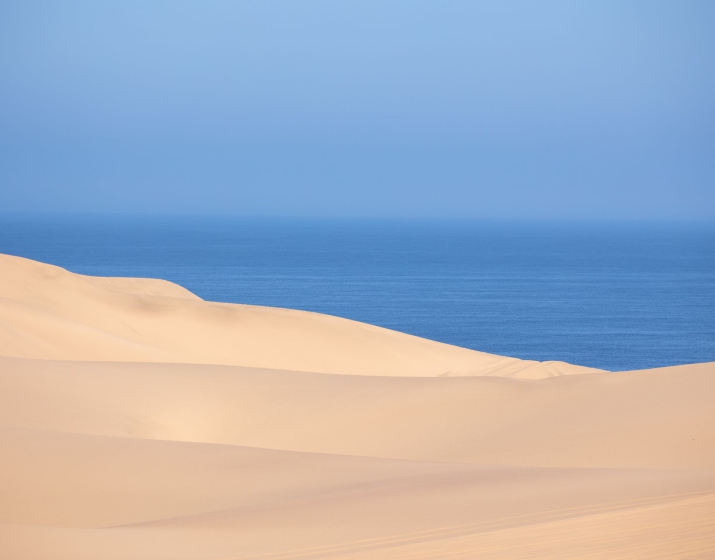
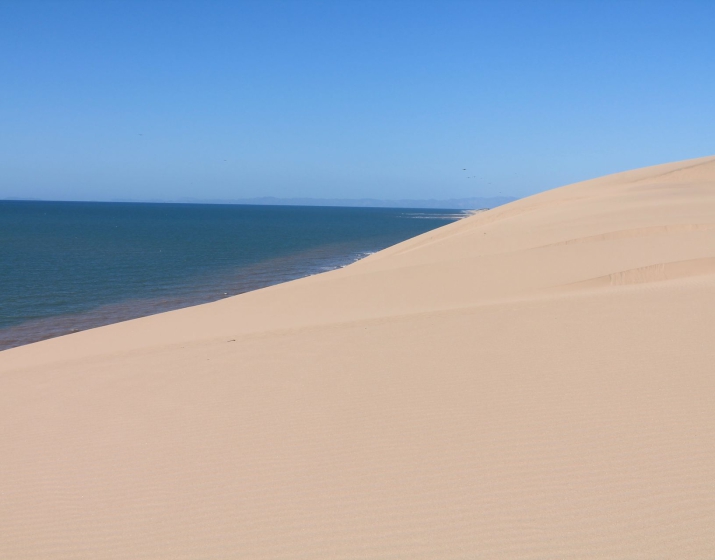
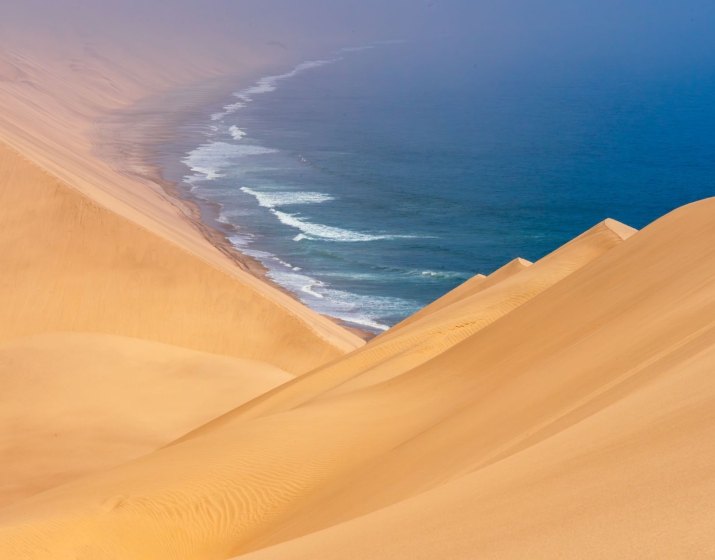
Sandwich Harbour is where the Namib Desert dunes meet the Atlantic Ocean. The dunes here rise over 100 metres and fall straight into the sea. You look down at the same lagoon you were riding beside an hour ago. From up here, it looks very different.
Good to Know Before You Book
Fat biking suits all ages and most fitness levels. No cycling experience is needed beyond basic balance. Helmets and gloves are provided. The best time to go is early morning between May and October, when temperatures are cooler and the lagoon is at its most active with birds.